http://www.youtube.com/user/TEDtalksDirector#p/u/4/zuAj2F54bdo
Very Intersting Stuff here - thanks to Bob for sharing it!
Maybe, just maybe this is what the Mayans might have been referring to??
Saturday, 14 January 2012

Wednesday, 11 January 2012
Fathers..................
My Dad has been experiencing some health problems as of late. As I sit here in Mexico, many many miles from home I worry about my Father. You see, Dads are very special people to us daughters. Any of us grown women who have been fortunate enough to have had a "Dad" will understand what I am posting about.
Sure, there are always family issues and problems but the difference between having a "good father" and a "not so good father" is simply easy to understand.
Good Fathers care about their Families................as daughters, these Good Fathers are the solid rock in our worlds that keep us feeling safe and balanced throughout our young lives. As we grow into women, we cherish "Our Fathers" - as keepers of our hearts. These special god given men for us are the ones whom we can count on throughout our lives when things go awry - they share their life experiences, teach us financial lessions, and embrace us with self esteem that carries us through our entire adutlt lives.
I cannot begin or want to elaborate on all the things that "My Dad and I" have been through together - that is private stuff. I can only say that we as grown women need to remember that our cherished
"Dads" will one day need our assistance and reassurance as they move into their Golden Years as health begins to decline.
Cherish our Fathers - that's todays Post.
Love U Dad,
Lorka
xoxo
Adjusting to Our New Lives..............
Those of us who are new to Mexico have the opportunity to learn a great deal about this country and its culture. In addition, we have the unique opportunity to learn about yourselves. We are experiencing the fascination of living in another country as well as the frustration of missing things that were so familiar to us at home. As we continue to experience living in Mexico and it's culture, it has become important for us to reflect on and discuss our experiences with others here. Thus the bond of new friendships becomes so very important to us both.
Anyone who is going to live in another country for an extended period of time should be aware of culture shock. While living in a new setting with unfamiliar social behaviors and a different language is certainly exciting, the excitement invariably includes feelings of disorientation and sometimes a little anxiety. I researched this a little and below is an excerpt of what seems to be agreed on by many new transplants here...............
Anyone who is going to live in another country for an extended period of time should be aware of culture shock. While living in a new setting with unfamiliar social behaviors and a different language is certainly exciting, the excitement invariably includes feelings of disorientation and sometimes a little anxiety. I researched this a little and below is an excerpt of what seems to be agreed on by many new transplants here...............
Culture shock is the emotional reaction to difficulties you may experience when you are cut off from familiar cultural patterns, including the subtle, indirect ways in which you normally express yourself and when you are unable to understand or predict what is going on around you. The everyday activities that you are used to accomplishing with ease in your home country, now sometimes seem like major endeavors. The symptoms frequently associated with culture shock include boredom, the need of excessive sleep, compulsive eating or drinking, family tension and conflict, and chauvinistic feelings. These symptoms may last from a few weeks to several months. Because everyone responds to culture shock differently, just be aware that it is a normal process and it happens to everybody. Culture shock is the process of adjusting to a new country and a new culture, and it has some stages with which you should become familiar.
The Honeymoon stage: upon arrival, your first reaction will most likely be that great enthusiasm, even dream-like. Adjustments are easily made in this phase. During this stage you should do as much as possible to get settled down.
The crisis stage: As your life settles into a routine, your initial euphoria fades and the challenges of adjustment become more apparent. For example, growing frustration with the language and cultural differences is common, turning some everyday events into significant challenges and small difficulties into major hindrances.
The flight stage: In response to these frustrations and anxieties, you may deny the reality that you are living in a different culture. You consequently adopt any number of avoidances techniques, such as refusing to go out regularly, burying yourself into books, or frequently contacting family and friends in your home country in order to resist engagements with the new culture.
The integration stage: All the different stages start to balance out and you begin to adjust in more positive ways to your surroundings. Your ability to interpret cultural signs improves. You are able to enjoy and begin to understand and grasp the Mexican customs while appreciating those of your country. You feel more capable and outgoing. However, this still includes moments of the earlier stages and difficult times. These fluctuations are normal and eventually you will experience the new culture from a more balanced perspective.
We have found that one of the best ways to deal with culture shock and to learn more about the Mexican culture is to get involved and participate in the varied social and cultural events offered here. Greg and I are slowly and steadily adjusting to our new world and at this time, after reading the above, feel we have hit the Intergration Stadge.
Moving to Lake Chapala has been and continues to be one of the greatest, most exciting experiences of our lives to date. We are looking forward to being here for the rest of our lives!
Viva Mexico we say!
Tuesday, 10 January 2012
A Forever Home for Little Oliver
On New Years Day, Greg and I hosted a party - an open house event. We had many new friends here for the afternoon. One couple absolutely fell in love with Oliver (the 3 month old pup that we took in from the street). This couple has another little dog that required a "playmate." A match made in heaven.
So, today little Oliver went to his new place - a happy ending for this wonderful little pup who would have surely perished on the streets.
Although it was tough to let him go, we are happy that Oliver ended up with his forever home.

So, today little Oliver went to his new place - a happy ending for this wonderful little pup who would have surely perished on the streets.
Although it was tough to let him go, we are happy that Oliver ended up with his forever home.

Saturday, 7 January 2012
The Day of the 3 Magic Kings!
The day of the 3 Magic Kings
Mexicans do not wait for Santa Claus to bring toys and presents at Christmas.
They wait a little bit longer : the day of the 3 Magic Kings –Melchior, Gaspar y Baltazar– which takes place on January the 6th. This celebration comes from a Catholic tradition that reminds us of the birth of Christ.
When he was a newborn baby, a very bright shining star was showing the way to the 3 most powerful and wise Kings through the desert to come and honor baby Jesus and offer him presents.
This is, for almost every Mexican child, the most important day of the year.
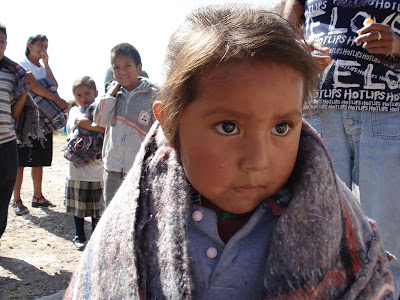
Because of the poverty in the country, there are many many children who wait for their present but it never comes.
Mexicans do not wait for Santa Claus to bring toys and presents at Christmas.
They wait a little bit longer : the day of the 3 Magic Kings –Melchior, Gaspar y Baltazar– which takes place on January the 6th. This celebration comes from a Catholic tradition that reminds us of the birth of Christ.
When he was a newborn baby, a very bright shining star was showing the way to the 3 most powerful and wise Kings through the desert to come and honor baby Jesus and offer him presents.
This is, for almost every Mexican child, the most important day of the year.

Because of the poverty in the country, there are many many children who wait for their present but it never comes.
Saturday, 24 December 2011
Santa's A Canadian!!
http://www.youtube.com/watch?v=Ei3rTITyOhY
Watch this.............it's great!
Merry Christmas again
xoxo
Watch this.............it's great!
Merry Christmas again
xoxo
Thursday, 22 December 2011
Christmas at Lakeside.............
As the Christmas season goes into full swing here this weekend, there will be multiple opportunities to attend special events and observe traditional Mexican holiday customs.
 Most of these long-standing practices trace back to the 16th century methods of indoctrination into the Christian faith introduced by Franciscan missionaries in the immediate aftermath of the Spanish conquest.
Posadas
The festivities kick off with nine consecutive days of neighborhood processions known as Las Posadas, running from December 16 through Christmas Eve.
Crowds of youngsters gather each afternoon to reenact the Holy Family’s quest for lodging in Bethlehem. The procession is usually headed by a pair of children dressed for the roles Mary and Joseph, with the Virgin Mother sometimes perched on a live burro. They are followed by other tots representing pastores y pastoras (shepherds and shepherdesses), often decked out in colorful handmade costumes and carrying brightly decorated báculos (walking staffs) and faroles (paper lanterns).
The parade of santos peregrinos (Holy Pilgrims) makes several stops along the way at designated addresses where they croon verses of a traditional litany asking the “inn-keepers” behind the door to provide shelter for the night. Voices from inside, replying in alternate stanzas, turn them away.
At the final destination the hosts chant that there is no room in the posada (inn), but they are welcome to take refuge in the stable. The doors are flung open and all are invited to enter. A happy fiesta ensues, complete with piñata smashing, hand-outs of bolos (packets of sweets), and holiday refreshments.
A very beautiful time of the year here at Lake Chapala - wish you were here to share it with us. We will miss our families back home this Christmas and we're thankful for Skype which will allow us to visit via the internet!
Merry Christmas!
The main churches in Ajijic and Chapala stage one-night exhibit-ions of a dozen or more live nativities.
Posadas
The festivities kick off with nine consecutive days of neighborhood processions known as Las Posadas, running from December 16 through Christmas Eve.
Crowds of youngsters gather each afternoon to reenact the Holy Family’s quest for lodging in Bethlehem. The procession is usually headed by a pair of children dressed for the roles Mary and Joseph, with the Virgin Mother sometimes perched on a live burro. They are followed by other tots representing pastores y pastoras (shepherds and shepherdesses), often decked out in colorful handmade costumes and carrying brightly decorated báculos (walking staffs) and faroles (paper lanterns).
The parade of santos peregrinos (Holy Pilgrims) makes several stops along the way at designated addresses where they croon verses of a traditional litany asking the “inn-keepers” behind the door to provide shelter for the night. Voices from inside, replying in alternate stanzas, turn them away.
At the final destination the hosts chant that there is no room in the posada (inn), but they are welcome to take refuge in the stable. The doors are flung open and all are invited to enter. A happy fiesta ensues, complete with piñata smashing, hand-outs of bolos (packets of sweets), and holiday refreshments.
A very beautiful time of the year here at Lake Chapala - wish you were here to share it with us. We will miss our families back home this Christmas and we're thankful for Skype which will allow us to visit via the internet!
Merry Christmas!
Subscribe to:
Posts (Atom)